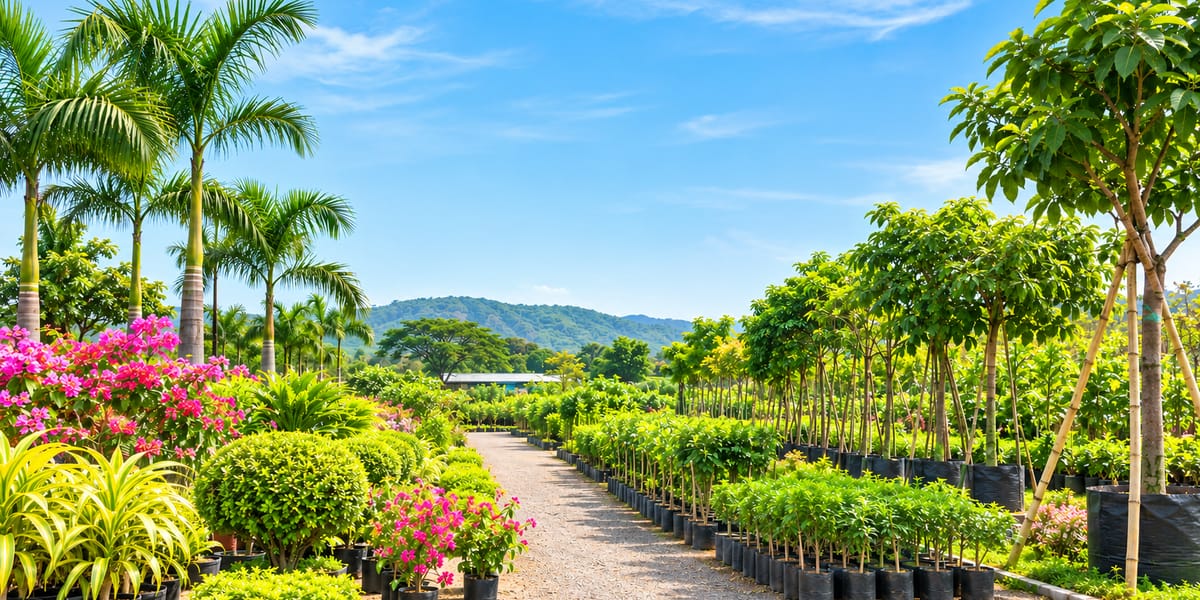
Why India Is Becoming a Preferred Destination for International Nursery Plant Buyers
The global demand for nursery plants is increasing as countries invest more in landscaping, urban greenery, commercial horticulture, environmental conservation and sustainable development. From ornamental plants and flowering trees to fruit-bearing varieties and large landscape trees, international buyers are looking for reliable suppliers who can provide healthy plants in different varieties and quantities.
India is gradually establishing itself as an attractive sourcing destination for international nursery plant buyers. Its diverse climatic conditions, rich plant biodiversity, skilled horticultural workforce and expanding nursery industry create favourable opportunities for supplying plants to international markets.
For landscape developers, commercial growers, garden centres, distributors and international nurseries, sourcing plants from India offers access to a wide selection of species and cultivation expertise. Experienced Indian Nursery Plants Exporters are helping international buyers meet their requirements through organised cultivation, plant selection, quality management and export coordination.
But what makes India an increasingly preferred destination for international plant sourcing? Let's explore the major factors contributing to this growing interest.
1. India's Rich Biodiversity and Wide Variety of Plants
One of India's biggest advantages is its extraordinary biodiversity. The country has tropical, subtropical, temperate and semi-arid climatic regions, supporting the cultivation of numerous plant varieties.
This diversity allows Indian nurseries to grow different categories of plants suitable for landscaping, horticulture, commercial plantations and residential gardens.
Some popular categories supplied by Indian nurseries include:
- Fruit Plants: Mango, guava, pomegranate, lemon, jamun, custard apple and other fruit-bearing varieties.
- Ornamental Plants: Decorative trees, shrubs and plants used in gardens, resorts and commercial landscapes.
- Flowering Plants: Varieties such as bougainvillea, hibiscus, frangipani and other flowering species.
- Forest and Shade Trees: Trees suitable for plantation programmes, avenue development and green infrastructure.
- Palm Varieties: Royal palms, foxtail palms and other varieties used in premium landscaping.
- Exotic Plants: Selected tropical and ornamental species used in specialised landscaping projects.
This wide selection makes Plant Exporters from India an attractive sourcing option for buyers who need multiple plant categories from a single supplier.
2. Favourable Climatic Conditions for Plant Cultivation
India's geographical and climatic diversity provides excellent opportunities for nursery cultivation.
Different regions experience different temperatures, rainfall patterns, humidity levels and soil conditions. These variations allow nurseries to cultivate tropical, subtropical and other regionally suitable plant varieties.
For example, Maharashtra and other western Indian regions support the cultivation of several fruit plants, ornamental trees, flowering varieties and landscape plants.
This climatic advantage helps Indian nursery businesses maintain diverse plant collections and develop cultivation expertise across different species.
For international buyers, this means greater flexibility when selecting plants for different landscaping and horticultural requirements. However, the suitability of each plant must always be assessed according to the destination country's climate, soil conditions and quarantine regulations.
3. Competitive Plant Sourcing and Production Costs
Cost efficiency is another important consideration for international nursery plant buyers.
Large landscaping companies, commercial growers, garden centres and plant distributors often require plants in bulk quantities. Purchasing from suppliers who can manage large-scale cultivation and organised production can help buyers manage their overall sourcing budgets.
India offers opportunities for competitive plant sourcing through:
- Established nursery cultivation practices.
- Availability of skilled horticultural workers.
- Regional access to different planting materials.
- Large-scale plant production capabilities.
- Diverse plant varieties across different price categories.
- Opportunities for customised bulk plant orders.
Experienced Wholesale Nursery Plants India suppliers can help international buyers source plants according to their required varieties, sizes, quantities and project specifications.
However, buyers should evaluate more than the purchase price. Plant health, packaging, transportation, documentation and destination-country compliance are equally important when calculating the overall import cost.
4. Growing Expertise in Nursery Cultivation and Plant Propagation
Successful plant exports begin with proper cultivation and propagation.
Indian nurseries increasingly focus on organised cultivation methods, including grafting, budding, cutting propagation, seed propagation and other horticultural techniques depending on the plant species.
These methods help nurseries produce plants with specific characteristics and maintain consistency across selected varieties.
For example, grafted fruit plants are particularly important for commercial orchard development because they help maintain desired varietal characteristics.
Similarly, ornamental and landscape plants require appropriate pruning, root development, container management and regular maintenance before they are ready for transportation.
Professional Indian Plant Nursery Suppliers understand that international buyers require more than just a variety of plants. They also need healthy planting material that has been properly cultivated and prepared for its intended purpose.
5. Increasing International Demand for Landscaping and Green Infrastructure
Landscaping and environmental development projects are creating opportunities for nursery plant suppliers worldwide.
Residential developments, commercial buildings, hotels, resorts, public parks, educational institutions and infrastructure projects increasingly incorporate green spaces into their planning.
These projects require different types of plants, including:
- Mature trees for premium landscaping.
- Flowering plants for decorative gardens.
- Palm trees for commercial and residential properties.
- Shade trees for outdoor spaces.
- Ornamental plants for landscape architecture.
- Fruit plants for residential and commercial orchards.
India's nursery industry can support these requirements by supplying different plant categories for diverse project applications.
As a result, International Nursery Plant Suppliers with organised production facilities and export experience are becoming valuable partners for overseas landscaping companies, garden centres and plant distributors.
6. A Diverse Supplier Base for Wholesale Requirements
International buyers frequently look for suppliers who can fulfil multiple requirements without depending on several different nurseries.
India's nursery sector includes businesses specialising in fruit plants, ornamental varieties, flowering plants, forest trees, palms, exotic species and mature landscaping trees.
This diversity provides buyers with opportunities to consolidate their sourcing requirements.
For example, a landscaping company developing a resort may require flowering plants, palm trees, decorative shrubs and mature trees. A commercial agricultural project may need thousands of grafted fruit plants of selected varieties.
Working with experienced Indian Nursery Plants Exporters can simplify plant selection, bulk procurement, quality coordination and shipment planning.
However, the supplier's actual production capacity, plant availability and ability to meet export requirements should always be verified before confirming a large order.
7. Improving Plant Export Handling and Packaging Practices
Exporting live plants requires specialised attention because plants are living products that can be affected by temperature, humidity, handling conditions and transportation time.
Improper packaging or unsuitable transportation can cause moisture loss, physical damage and stress to plants.
Professional plant exporters therefore need to consider several important factors before dispatching an international shipment.
These include:
- Plant Selection: Selecting healthy plants according to the buyer's requirements and destination-country regulations.
- Root Protection: Preparing the root system and growing medium according to applicable import conditions.
- Moisture Management: Maintaining appropriate moisture levels during packing and transportation.
- Protective Packaging: Using suitable packaging methods to reduce physical damage during handling.
- Shipment Coordination: Planning transportation schedules and handling arrangements to minimise unnecessary delays.
Such practices are essential for maintaining plant quality throughout the export journey.
8. Understanding International Phytosanitary and Export Requirements
One of the most important aspects of international plant trade is regulatory compliance.
Different countries have specific import regulations to prevent the introduction of pests, diseases, invasive species and other plant-health risks.
Indian exporters must understand the applicable export policies and the importing country's requirements before preparing a shipment.
Depending on the plant species and destination, the export process may involve:
- Verification of the plant's export eligibility.
- Required cultivation or legal possession documentation.
- Phytosanitary inspection and certification.
- Compliance with applicable quarantine requirements.
- CITES documentation for regulated species, wherever applicable.
- Commercial invoice and packing list.
- Relevant shipping and customs documentation.
The phytosanitary certificate is particularly important because it provides an official declaration regarding the plant-health requirements specified by the importing country.
Export conditions can vary depending on the species, country and applicable regulations. Therefore, international buyers should work with knowledgeable exporters who understand the documentation and compliance requirements.
9. Why Choosing an Experienced Exporter Matters
Selecting the right supplier is one of the most important decisions for international nursery plant buyers.
A supplier's ability to grow plants is only one part of the export process. Buyers should also consider cultivation experience, product availability, packaging capabilities, documentation support and communication.
Before selecting a nursery exporter, international buyers should evaluate:
- Cultivation Experience: Check the supplier's experience in growing and maintaining different plant varieties.
- Plant Quality: Request recent photographs, specifications and details about plant health.
- Variety Availability: Confirm whether the required species, sizes and quantities are available.
- Export Experience: Understand the supplier's experience with international shipments.
- Packaging Practices: Ask about root protection, moisture management and transportation preparation.
- Regulatory Knowledge: Confirm that the exporter understands the applicable phytosanitary and destination-country requirements.
- Communication: Choose a supplier who provides clear information about quotations, order processing and shipment arrangements.
These factors help buyers make informed sourcing decisions and establish long-term business relationships.
10. Pansare Nursery: Supporting International Plant Sourcing Requirements
Pansare Nursery is an established nursery based in Kashti, Maharashtra, India, with experience in plant cultivation and supply.
With three generations of nursery experience and approximately 30 acres of cultivated land, the nursery focuses on providing a diverse selection of plants for different horticultural and landscaping requirements.
Its plant range includes fruit plants, grafted fruit plants, ornamental and flowering plants, forest and shade trees, exotic plants, palms and mature landscaping trees.
For international buyers, having access to multiple plant categories through an experienced nursery can simplify sourcing for residential landscaping, commercial developments, plantations and horticultural projects.
Pansare Nursery focuses on plant selection, cultivation, preparation and export coordination according to the requirements of individual orders.
Buyers interested in understanding the nursery's plant range and export capabilities can explore the Plants Exporters in India page.
To learn more about the nursery's background, cultivation experience and facilities, visit the About Pansare Nursery page.
11. The Future of India's Nursery Plant Export Industry
The future of India's nursery plant export industry is closely connected with the growing importance of sustainable landscaping, horticultural development and environmental conservation.
As international markets continue to invest in green infrastructure, demand for different plant varieties is expected to create opportunities for organised nursery businesses.
Indian exporters can strengthen their international presence by focusing on:
- Scientific plant cultivation and propagation.
- Consistent plant quality and availability.
- Better packaging and transportation practices.
- Improved export documentation and compliance.
- Stronger international business relationships.
- Species selection based on destination-country requirements.
- Sustainable nursery management practices.
Investment in these areas can help Indian nursery businesses improve their competitiveness and develop stronger relationships with international buyers.
For buyers, India offers an opportunity to explore a broad range of nursery plants through suppliers with diverse cultivation expertise.
Conclusion
India is becoming an attractive destination for international nursery plant buyers because of its rich biodiversity, favourable cultivation conditions, diverse plant varieties, skilled horticultural workforce and competitive sourcing opportunities.
From fruit-bearing plants and ornamental trees to exotic varieties and mature landscaping trees, Indian nurseries offer a wide selection for different international horticultural and landscaping requirements.
However, successful international plant sourcing depends on more than variety and pricing. Plant health, regulatory compliance, export documentation, packaging and transportation planning all play important roles in ensuring a smooth sourcing experience.
Choosing experienced Indian Nursery Plants Exporters can help international buyers establish dependable supply relationships and source plants according to their specific requirements.
With its nursery experience, diverse plant collection and cultivation facilities, Pansare Nursery aims to support domestic and international buyers looking for quality plants for landscaping, horticulture and plantation projects.
Looking for reliable nursery plant suppliers from India? Connect with Pansare Nursery to explore available plant varieties and discuss your international plant sourcing requirements.
Frequently Asked Questions
Why is India becoming a preferred destination for international nursery plant buyers?
India offers diverse plant varieties, favourable climatic conditions, skilled horticultural expertise and competitive sourcing opportunities. Its nurseries supply fruit plants, ornamental trees, flowering plants, palms and other varieties for international landscaping and horticultural projects.
What types of plants can international buyers source from India?
International buyers can source a wide range of plants, including grafted fruit plants, mango, guava, pomegranate, lemon, ornamental trees, flowering plants, palms, forest trees, exotic plants and mature landscaping trees, subject to export eligibility.
How can I find reliable Indian Nursery Plants Exporters?
Buyers should evaluate nursery experience, plant quality, variety availability, cultivation facilities, export documentation knowledge, packaging practices and previous international supply experience before selecting an exporter.
Do Indian plant exporters supply plants in wholesale quantities?
Yes. Many Indian nurseries handle bulk plant requirements for landscaping companies, commercial plantations, garden centres, distributors and horticultural projects. Availability depends on plant varieties, sizes, quantities and seasonal production.
What is the nursery plant export process in India?
The process generally involves plant selection, order confirmation, export eligibility verification, phytosanitary inspection, required documentation, suitable packaging, customs procedures and international shipment arrangements.
What documents are required to export nursery plants from India?
Depending on the plant species and destination country, documents may include a phytosanitary certificate, commercial invoice, packing list, shipping documents, applicable export permissions and additional certificates required by the importing country.
Can international buyers order different plant varieties from one Indian nursery?
Yes. Depending on availability and export eligibility, buyers can source multiple categories, such as fruit plants, ornamental trees, flowering plants, palms and forest plants, through a single nursery supplier.

