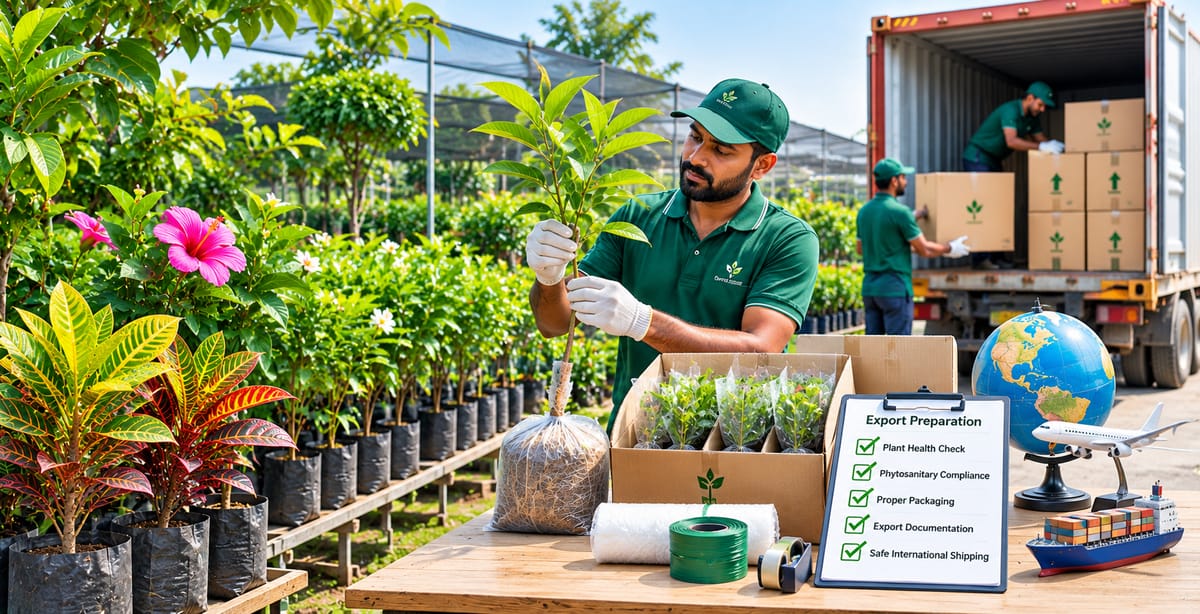
How Indian Nurseries Prepare Live Plants for Safe International Export
The international demand for Indian nursery plants is growing as countries invest in commercial agriculture, landscaping, urban greenery, and environmental development. From fruit-bearing saplings and ornamental plants to tropical varieties and mature trees, international buyers increasingly look to Indian nurseries for quality plant supplies.
However, exporting live plants requires much more than selecting healthy saplings and arranging transportation. Plants must undergo proper cultivation, health inspection, pre-shipment preparation, packaging, and documentation to reach their destination safely.
Experienced Live Plants Exporters India follow systematic nursery and export practices to maintain plant health and meet the importing country's plant quarantine requirements.
Understanding this process helps international buyers, wholesale distributors, commercial growers, and landscaping companies choose the right Indian nursery supplier.
1. Selecting Healthy Plants for International Export
The first step in live plant export is selecting suitable plants from the nursery. Only healthy, well-developed plants should be considered for export preparation.
Nursery specialists evaluate several factors:
- Strong and properly developed root systems.
- Healthy leaves and stems.
- Appropriate plant height and growth.
- Absence of visible pests and diseases.
- Correct plant variety and identification.
- Suitability for the destination's growing conditions.
Different plant categories require different selection criteria. For example, grafted fruit plants need healthy graft unions, while ornamental plants require attractive foliage and balanced growth.
Proper selection helps maintain consistency and reduces the risk of damage during transportation.
2. Scientific Cultivation and Nursery Management
Healthy export-quality live plants begin with proper nursery management. Plants need suitable growing conditions throughout their development.
Professional nurseries focus on:
- Soil and Growing Media: Suitable soil mixtures and growing media support healthy roots and balanced plant growth.
- Controlled Irrigation: Proper watering prevents excessive moisture and dehydration.
- Nutrient Management: Balanced fertilisation supports plant development and overall health.
- Sunlight Management: Appropriate sunlight and shade conditions help plants develop according to their requirements.
- Pest and Disease Monitoring: Regular inspection helps identify and manage potential plant health problems.
Scientific cultivation practices help live plant suppliers India maintain consistent quality across different plant varieties and bulk orders.
3. Plant Health Inspection Before Export
Plant health inspection is one of the most important stages of international plant export.
Before shipment, nursery teams examine plants for visible insects, fungal infections, damaged roots, unhealthy foliage, and other problems.
Plants intended for export may also require official inspection and treatment according to the importing country's regulations.
A phytosanitary certificate is generally required for regulated plant consignments entering international markets. It is issued by the authorised plant protection authority after the applicable inspection and certification requirements are met.
This documentation helps demonstrate that the consignment complies with the relevant plant health requirements.
4. Plant Hardening and Pre-Shipment Preparation
Plants grown in nursery conditions may experience stress when exposed to different temperatures, humidity levels, and transportation environments.
Plant hardening helps prepare them for changing environmental conditions.
Depending on the species and destination, preparation may include:
- Gradual adjustment to sunlight and environmental conditions.
- Appropriate irrigation management.
- Removal of damaged leaves and unhealthy branches.
- Inspection of roots and growing media.
- Careful preparation for transportation.
The objective is to maintain plant health and reduce transplant shock.
Different varieties require different preparation methods, so the process should be adapted to the specific plant species and destination requirements.
5. Root Preparation and Safe Packaging
Packaging plays a critical role in protecting live plants during international transportation.
The packaging method depends on plant type, shipment duration, destination regulations, and approved import conditions.
Common preparation considerations include:
- Root Protection: Roots must be protected against physical damage and excessive drying.
- Moisture Management: Appropriate moisture levels help prevent dehydration without creating conditions that encourage fungal growth.
- Stem and Leaf Protection: Plants should be positioned securely to minimise breakage and crushing.
- Secure Packing: Suitable cartons, protective materials, and plant supports help reduce movement during transit.
- Correct Labelling: Packages should carry the required identification and handling information.
Some destinations restrict soil or certain growing media. Therefore, nurseries must follow the specific import conditions rather than using the same packaging method for every country.
6. Export Documentation and International Plant Regulations
International live plant shipping involves regulatory requirements that vary depending on the destination country and plant species.
Important documents and checks may include:
- Phytosanitary Certificate.
- Import Permit from the destination country, where required.
- Commercial Invoice.
- Packing List.
- Certificate of Origin, where applicable.
- Botanical identification and shipment details.
- Additional treatment or quarantine documentation, where required.
Certain plants may be restricted or prohibited because of pest risks, invasive species concerns, or conservation regulations.
Experienced exporters coordinate with the relevant authorities and logistics partners to ensure that shipments meet applicable requirements.
7. Choosing the Right Transportation for Live Plants
Transportation planning is essential because live plants are sensitive to environmental conditions and handling.
The appropriate shipping method depends on plant size, quantity, destination, shipment duration, and import requirements.
Important considerations include:
- Selecting suitable air or sea freight arrangements.
- Minimising unnecessary delays during transit.
- Protecting plants from extreme temperatures.
- Ensuring secure loading and handling.
- Coordinating documentation and customs clearance.
- Planning delivery according to plant requirements.
For longer shipments, temperature and ventilation management may be particularly important.
Proper coordination between the nursery, freight forwarder, exporter, and importer helps reduce transportation risks.
8. Why International Buyers Choose Indian Live Plant Suppliers
India has a diverse horticultural environment and established nursery cultivation capabilities. Its nurseries offer different categories of plants for agriculture, landscaping, commercial plantations, and international distribution.
International buyers consider Indian suppliers for:
- Wide varieties of fruit and ornamental plants.
- Grafted and plantation-ready saplings.
- Wholesale and bulk supply options.
- Tropical and decorative plant varieties.
- Mature landscaping trees.
- Nursery cultivation and export preparation experience.
Working with experienced Live Plants Wholesale Suppliers helps international buyers coordinate plant selection, quantities, quality requirements, and shipping arrangements.
9. Pansare Nursery – Your Trusted Partner for Live Plant Exports from India
Pansare Nursery, located in Kashti, Shrigonda, Ahilyanagar, Maharashtra, has more than 50 years of nursery experience.
The nursery supplies different plant categories for domestic and international requirements, including:
- Fruit Plants
- Grafted Fruit Plants
- Ornamental and Flowering Plants
- Plumeria Plants
- Forest and Shade Plants
- Mature and Ready Landscaping Trees
- Adenium Plants
Its export preparation process focuses on plant selection, healthy cultivation, plant care, appropriate packaging, and documentation support.
With experience in international plant supply, Pansare Nursery caters to commercial growers, international nurseries, landscape developers, and wholesale buyers.
Explore its complete range of Plants Exporters in India.
For specialised agricultural requirements, discover Grafted Fruit Plants.
You can also explore its collection of Ornamental & Flowering Plants for decorative and commercial landscaping requirements.
Conclusion
Preparing live plants for international export requires careful planning, scientific nursery management, plant health inspection, appropriate packaging, and regulatory compliance.
Every stage, from selecting healthy saplings to coordinating international transportation, contributes to maintaining plant quality and reducing shipping risks.
For international importers, commercial growers, and wholesale distributors, choosing experienced Live Plants Exporters India is essential for dependable plant sourcing.
Pansare Nursery combines decades of nursery experience with plant cultivation and export preparation practices to support domestic and international plant requirements.
Choose a reliable nursery partner and ensure that every plant shipment is prepared with care, quality, and responsibility.
Frequently Asked Questions
How are live plants prepared for international export?
Plants are selected, inspected, conditioned, prepared for shipment, securely packaged, and accompanied by the required export and phytosanitary documentation.
What is a phytosanitary certificate for plant exports?
It is an official document issued by an authorised plant protection authority confirming that the inspected plant consignment meets the applicable phytosanitary requirements.
How are roots protected during international plant shipping?
Roots are prepared and protected using suitable packing materials and moisture management methods according to plant species and destination-country regulations.
Can Indian nurseries supply live plants in bulk?
Yes. Many Indian nurseries support bulk requirements for commercial plantations, landscaping projects, wholesale distributors, and international buyers, subject to availability.
What plants can be exported from India?
Depending on destination-country regulations, Indian nurseries can export fruit plants, grafted plants, ornamental varieties, flowering plants, palms, and other permitted nursery plants.
How can I find reliable live plant exporters in India?
Look for experienced nurseries offering healthy plants, proper cultivation practices, export documentation support, secure packaging, and international shipping coordination.

