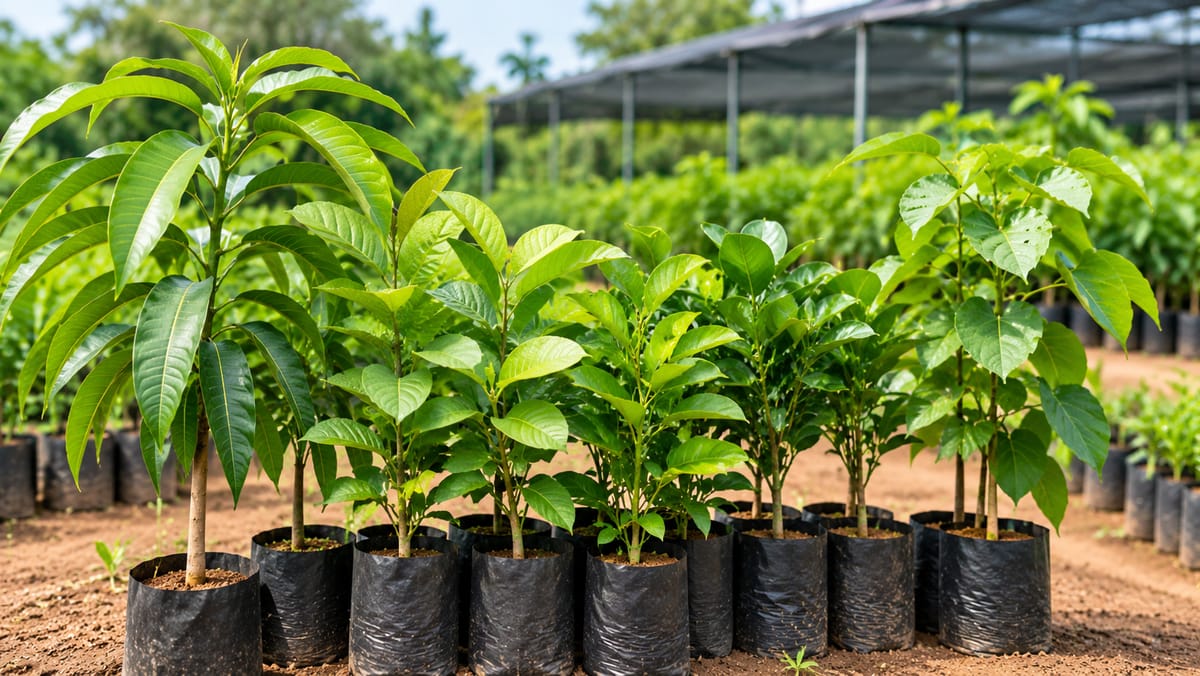
Top Fruit Plants Exported from India: Popular Varieties, Quality Standards and Export Process
Introduction
India is known for its diverse fruit varieties, favourable growing conditions and established horticultural industry. From premium mangoes and guavas to pomegranates, lemons and custard apples, Indian nurseries offer a wide range of fruit plants for commercial cultivation and international buyers.
With increasing interest in tropical fruit cultivation, many agricultural businesses and international buyers are looking for reliable Fruit Plants Exporters in India to source healthy, quality planting materials.
Indian nurseries offer different varieties of grafted and propagated fruit plants suitable for orchards, commercial plantations and wholesale requirements. However, selecting the right supplier involves considering plant health, variety authenticity, quality standards and international export regulations.
In this blog, we explore popular fruit plants available from India, their characteristics, quality requirements and the export process.
1. Why Choose Fruit Plants from India?
India has a well-established horticultural sector supported by diverse climatic conditions and nursery cultivation practices. International buyers consider Indian nurseries for several reasons.
- Wide Variety Selection: Mango, guava, pomegranate, lemon, custard apple, sapota and other fruit plants are available.
- Grafted Plant Availability: Grafted plants help maintain selected fruit variety characteristics and offer earlier fruiting potential than seed-grown plants.
- Wholesale Supply: Indian nurseries can cater to bulk requirements for commercial plantations and agricultural businesses.
- Horticultural Experience: Indian growers have extensive experience in fruit cultivation and plant propagation.
- Variety of Growing Regions: Different Indian states specialise in different tropical and subtropical fruit crops.
These advantages make India an important sourcing destination for buyers exploring fruit plant suppliers.
2. Top Fruit Plants Exported from India
Indian nurseries cultivate several commercially important fruit varieties. Here are some popular options for international buyers.
2.1 Mango Plants
Mango is one of India's most recognised fruit crops, with varieties appreciated for their flavour, aroma and commercial value.
Popular varieties include:
- Alphonso (Hapus)
- Kesar
- Totapuri
- Amrapali
- Dasheri
- Ratna
Grafted mango plants are commonly preferred for commercial orchards because they help maintain varietal characteristics and offer earlier fruiting potential.
International buyers searching for Mango Plant Exporters India should check plant health, grafting quality and variety authenticity before ordering.
2.2 Guava Plants
Guava is a popular tropical and subtropical fruit cultivated for fresh consumption and processing.
Popular varieties include:
- Sardar (L-49)
- Allahabad Safeda
- Thai Guava
- Lalit
- Shweta
Healthy guava plants with proper root development and correct variety identification are important for successful plantation establishment.
2.3 Pomegranate Plants
Pomegranate is an important commercial fruit crop, particularly in Maharashtra and other suitable Indian agricultural regions.
Popular varieties include:
- Bhagwa
- Phule Arakta
- Ganesh
- G-137
These varieties are considered for their fruit quality, colour and cultivation characteristics.
Buyers looking for Pomegranate Plant Suppliers India should confirm the plant variety, propagation method and suitability for their local climate.
2.4 Custard Apple Plants
Custard apple, also known as Sitaphal, is valued for its sweet pulp and distinctive flavour.
Popular selections include Balanagar, Arka Sahan and other regional varieties.
These plants are suitable for tropical and subtropical cultivation, depending on local soil and climatic conditions.
Explore our Custard Apple Plants.
2.5 Lemon Plants
Lemon plants are widely cultivated for fresh consumption, juice production and food processing.
Popular varieties include:
- Kagzi Lemon
- Sai Sharbati
- Pant Lemon
- Other selected citrus varieties
Healthy grafted lemon plants can support commercial cultivation when suitable varieties are selected.
Explore our Lemon Plants.
3. Why Are Grafted Fruit Plants Preferred?
Grafting is a popular plant propagation technique in which a selected scion is joined with a suitable rootstock.
Many commercial growers prefer grafted plants because of the following advantages:
- True-to-Type Characteristics: Helps maintain the desirable characteristics of the selected fruit variety.
- Earlier Fruiting Potential: Grafted plants generally produce fruits earlier than seed-grown plants.
- Uniform Growth: Helps establish more consistent commercial plantations.
- Variety Selection: Allows growers to select specific fruit varieties according to market requirements.
- Commercial Suitability: Supports planned orchard development and fruit production.
When purchasing from Grafted Fruit Plants Exporters, buyers should verify rootstock compatibility, grafting quality and plant health.
Explore our Grafted Fruit Plants.
4. Quality Standards for Export-Quality Fruit Plants
Plant quality is one of the most important factors when selecting Indian fruit nursery exporters.
International buyers should evaluate the following parameters before placing an order.
- Healthy Root Development: Plants should have well-developed roots without visible damage or signs of root disease.
- Pest and Disease Inspection: Leaves, stems and roots should be checked for visible pest infestation and disease symptoms.
- True-to-Type Identification: Plant varieties should be correctly labelled and supported by suitable nursery records.
- Proper Plant Development: Plant height, stem thickness and growth should meet the agreed specifications.
- Hardening: Plants should undergo suitable nursery hardening to prepare them for changing environmental conditions.
- Phytosanitary Compliance: Live plants must meet the importing country's plant health requirements. An official phytosanitary certificate may be required before export.
Quality checks help reduce transportation risks and support better plant establishment after delivery.
5. Fruit Plant Export Process from India
Exporting live fruit plants requires proper planning, documentation and compliance with international plant quarantine regulations.
The general export process involves the following steps:
- Variety Selection: Identify the required fruit plants, varieties and quantities.
- Supplier Selection: Choose a reliable nursery with suitable plant production and quality inspection practices.
- Import Regulation Verification: Confirm whether the destination country permits the selected plants and check its import permit requirements.
- Plant Quality Inspection: Verify plant health, root development, variety identification and agreed specifications.
- Phytosanitary Certification: Obtain the required inspection and phytosanitary certificate through the authorised Indian plant protection authority.
- Export Documentation: Prepare commercial invoices, packing lists, shipping documents and other required certificates.
- Packaging: Use suitable packaging to protect plants during transportation while following destination-country restrictions.
- Shipment and Customs: Complete applicable export formalities and arrange suitable international transportation.
- Import Clearance: The destination country's authorities may inspect the plants and verify documentation before release.
Important: Export requirements differ by country and plant species. Importers should confirm the latest regulations before placing an order.
6. How to Choose Reliable Fruit Plants Wholesale Suppliers?
Selecting the right supplier is essential for international buyers and commercial plantation developers.
Before finalising your order, consider these factors:
- Check the nursery's experience and available fruit varieties.
- Verify grafting and propagation practices.
- Request plant photographs and specifications.
- Confirm bulk supply capacity and availability.
- Review plant health and quality inspection procedures.
- Discuss export documentation and packaging requirements.
- Confirm destination-country import eligibility.
Reliable Fruit Plants Wholesale Suppliers should provide clear information about plant varieties, quantities, quality and supply arrangements.
7. Why Choose Pansare Nursery?
Pansare Nursery, based in Daund, Maharashtra, India, offers a diverse range of fruit plants for farmers, nursery businesses, wholesalers and commercial plantation developers.
Our plant categories include:
- Mango plants
- Guava plants
- Pomegranate plants
- Custard apple plants
- Lemon plants
- Sapota plants
- Avocado plants
- Other selected fruit varieties
We focus on appropriate propagation practices, plant health monitoring, variety selection and quality checks.
Whether you are planning a commercial orchard or sourcing plants in bulk, our team can help you explore suitable fruit plant options and discuss your requirements.
Explore our complete range of Plants Exporters in India.
Conclusion
India offers a diverse range of fruit plants supported by established nursery practices and horticultural knowledge. From mango and guava to pomegranate, lemon and custard apple, international buyers have several options for commercial fruit cultivation.
Choosing reliable Fruit Plants Exporters in India involves evaluating plant quality, variety authenticity, propagation methods and export compliance.
Pansare Nursery aims to support farmers, wholesalers and international buyers with a diverse selection of fruit plants and nursery supply solutions.
Frequently Asked Questions
Which fruit plants are commonly available from Indian exporters?
Mango, guava, pomegranate, lemon, custard apple, sapota, avocado and amla are among the fruit plants available from Indian nurseries.
Which mango varieties are popular in India?
Alphonso, Kesar, Totapuri, Amrapali and Dasheri are popular Indian mango varieties.
What are grafted fruit plants?
Grafted fruit plants are produced by joining a selected scion with a suitable rootstock to maintain desirable variety characteristics.
Can I purchase fruit plants wholesale from India?
Yes. Indian nurseries offer bulk fruit plant supply for commercial orchards, agricultural projects and nursery businesses, subject to availability.
What documents are required to export fruit plants from India?
Common documents include a phytosanitary certificate, commercial invoice, packing list and shipping documents. Additional permits and declarations depend on the destination country.
Are all fruit plants eligible for international export?
No. Export eligibility depends on the destination country's plant quarantine regulations, species, variety and phytosanitary requirements.

