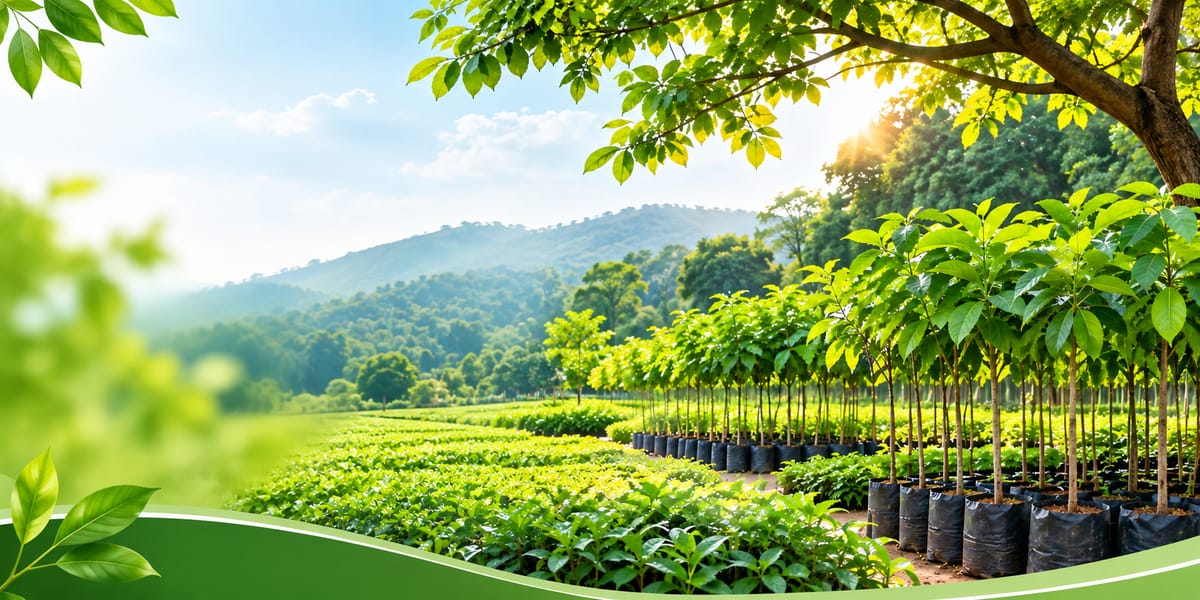
Top Forest Plants for Large-Scale Plantation and Afforestation Projects in India
India's growing focus on environmental conservation, sustainable infrastructure, urban forestry, and biodiversity protection has increased the importance of large-scale plantation and afforestation projects. From government-led green initiatives and industrial green belts to highway plantations and corporate CSR activities, trees play an essential role in building a healthier environment.
However, successful plantation projects require more than simply planting thousands of saplings. Selecting the right tree species according to soil conditions, rainfall, climate, available space, and long-term environmental objectives is equally important.
This is why choosing reliable Forest Plants Exporters India has become an important consideration for government departments, infrastructure developers, environmental organizations, landscaping companies, and plantation contractors.
India has a diverse range of forest and shade trees suitable for different plantation requirements. Selecting healthy, climate-appropriate plants from experienced nursery suppliers can help improve plantation establishment and long-term survival.
In this blog, we explore some of the best forest plants for large-scale plantation and afforestation projects in India, their benefits, and important factors to consider when selecting a wholesale forest plant supplier.
Why Are Forest Plants Important for Large-Scale Plantation Projects?
Forest plants contribute significantly to environmental sustainability. They support biodiversity, improve soil conditions, provide natural shade, and help create healthier ecosystems.
Large-scale plantation projects are particularly important in areas experiencing rapid urbanization, industrial development, deforestation, and environmental degradation.
Here are some major benefits of planting suitable forest trees:
1. Improving Air Quality
Trees absorb carbon dioxide and help capture certain airborne pollutants through their leaves and bark. Large plantation projects can contribute to improving local air quality, especially around industrial areas, highways, and urban developments.
2. Supporting Biodiversity
Native forest trees provide food, shelter, and nesting opportunities for birds, insects, and other wildlife. Planting multiple compatible native species helps create healthier and more diverse ecosystems.
3. Preventing Soil Erosion
Tree roots help bind soil particles and reduce erosion caused by wind and water. This is particularly valuable for plantations near riverbanks, slopes, agricultural boundaries, and degraded land.
4. Creating Natural Shade
Large-canopy trees help reduce direct sunlight exposure and improve outdoor comfort. They are useful for roadside plantations, public parks, educational campuses, industrial premises, and residential developments.
5. Supporting Climate Resilience
Well-planned plantations can contribute to carbon storage, local temperature regulation, and improved environmental conditions. Species selection should consider changing rainfall patterns, water availability, and local climate risks.
Top Forest Plants Suitable for Large-Scale Plantation and Afforestation Projects in India
Different tree species serve different environmental and landscaping purposes. The following varieties are commonly considered for forest development, green belts, roadside plantations, and large-scale plantation projects.
The final selection should always depend on local ecological conditions and the project's objectives.
1. Neem (Azadirachta indica)
Neem is one of the most widely recognized Indian trees and is suitable for several plantation applications.
It is known for its adaptability, drought tolerance once established, and medicinal importance. Its dense foliage provides shade, making it a suitable choice for roadside plantations, industrial green belts, agricultural boundaries, and community plantation projects.
Key Benefits:
- Suitable for many Indian climatic conditions.
- Tolerates relatively dry conditions once established.
- Provides natural shade.
- Supports biodiversity.
- Requires comparatively low maintenance after establishment.
2. Peepal (Ficus religiosa)
Peepal is a large-canopy tree valued for its environmental and cultural importance. Its extensive branching structure and foliage make it useful for spacious plantation locations.
It can be considered for parks, institutional campuses, community spaces, and suitable ecological restoration projects.
Key Benefits:
- Develops a broad canopy.
- Provides shelter and food for birds and wildlife.
- Supports urban greening.
- Suitable for large open spaces.
- Has significant ecological and cultural value.
3. Banyan (Ficus benghalensis)
Banyan is a magnificent Indian tree known for its extensive canopy and aerial roots. It is particularly suitable for locations where sufficient space is available for long-term growth.
It is commonly considered for large parks, institutional grounds, public gardens, and landscape development projects.
Key Benefits:
- Develops an extensive canopy.
- Provides habitat for birds and other organisms.
- Offers substantial natural shade.
- Suitable for large open landscapes.
- Contributes to long-term green infrastructure.
4. Kadamba (Neolamarckia cadamba)
Kadamba is a fast-growing tropical tree valued for its attractive foliage, rounded canopy, and fragrant flowers.
It is suitable for plantation projects in regions with adequate rainfall and appropriate soil moisture. It can be considered for green belts, institutional campuses, and selected afforestation initiatives.
Key Benefits:
- Relatively fast-growing under suitable conditions.
- Develops an attractive canopy.
- Suitable for tropical and subtropical regions.
- Supports pollinators.
- Useful for landscape and plantation development.
5. Jamun (Syzygium cumini)
Jamun is a versatile Indian tree known for its edible fruits, dense foliage, and adaptability to different growing conditions.
It is useful for agroforestry, community plantations, institutional campuses, and biodiversity-oriented plantation projects.
Key Benefits:
- Produces edible fruits.
- Provides shade.
- Supports birds and wildlife.
- Suitable for several Indian regions.
- Offers both ecological and community benefits.
6. Arjun (Terminalia arjuna)
Arjun is commonly associated with riverbanks and water-rich environments. Its strong root system and suitability for certain moist locations make it a useful species for selected ecological restoration projects.
It can be considered for riverbank plantation, watershed development, and green belt projects where local conditions are appropriate.
Key Benefits:
- Suitable for suitable moist and riverbank locations.
- Provides shade.
- Supports biodiversity.
- Has traditional medicinal importance.
- Useful in selected ecological restoration projects.
7. Karanj (Pongamia pinnata)
Karanj, also known as Indian Beech, is an important tree for agroforestry and environmental plantation initiatives.
It is valued for its adaptability, nitrogen-fixing ability, and suitability for various plantation applications.
Key Benefits:
- Helps improve soil fertility through nitrogen fixation.
- Tolerates relatively dry conditions once established.
- Suitable for roadside and boundary plantations.
- Provides shade.
- Supports sustainable agroforestry systems.
8. Amaltas (Cassia fistula)
Amaltas is a beautiful flowering tree recognized for its bright yellow hanging flowers.
Apart from its ornamental value, it can be considered for avenue plantations, public gardens, institutional campuses, and selected green infrastructure projects.
Key Benefits:
- Attractive seasonal flowering.
- Suitable for tropical and subtropical climates.
- Adds biodiversity value.
- Useful for avenue plantations.
- Requires appropriate sunlight and soil conditions.
9. Rain Tree (Samanea saman)
Rain Tree is a large-canopy shade tree commonly considered for spacious landscapes, institutional grounds, and selected roadside plantation projects.
Its broad canopy provides substantial shade, making it useful for locations requiring natural cooling.
Key Benefits:
- Develops a wide spreading canopy.
- Provides excellent shade.
- Suitable for large open areas.
- Useful for campus and landscape development.
- Contributes to urban green infrastructure.
10. Silver Oak (Grevillea robusta)
Silver Oak is a tall evergreen tree that can be used in selected plantation, agroforestry, and landscape applications.
It is valued for its upright growth habit and attractive foliage. Its suitability depends on the local climate, soil, and plantation objective.
Key Benefits:
- Tall and attractive growth structure.
- Useful for selected agroforestry systems.
- Suitable for certain subtropical regions.
- Provides shade.
- Can be considered for boundary and landscape plantations.
How to Select the Right Forest Plants for Afforestation Projects?
Choosing the right plants is one of the most important steps in any large-scale plantation project.
A species that performs well in one region may not necessarily survive in another. Therefore, project planners should consider several factors before placing bulk plant orders.
1. Understand Local Climate Conditions
India has different climatic zones, including tropical, subtropical, semi-arid, coastal, and mountainous regions.
Select tree species according to local rainfall, temperature, humidity, and seasonal conditions.
2. Evaluate Soil Quality
Soil texture, drainage, fertility, pH, and water retention influence plant establishment.
Conducting a basic soil assessment before plantation helps identify suitable tree varieties.
3. Prioritize Native Tree Species
Native forest trees are generally an important starting point for biodiversity-focused afforestation.
They are adapted to local ecological conditions and can support native insects, birds, and other wildlife.
Whenever possible, develop a diverse plantation using multiple locally appropriate species rather than depending on a single variety.
4. Consider Water Availability
Some trees require regular watering during their establishment period, while others can tolerate comparatively dry conditions.
Plant selection should match the available irrigation facilities and expected rainfall.
5. Check Plant Health and Root Development
Always purchase healthy nursery-grown plants with well-developed root systems.
Check for:
- Healthy leaves and stems.
- Strong root development.
- No visible pest or disease infestation.
- Appropriate plant height and age.
- Properly maintained growing containers or root balls.
Why Choose Wholesale Forest Plant Suppliers for Large Projects?
Large-scale afforestation and plantation projects often require hundreds or thousands of plants in a single order.
Working with experienced Forest Plants Wholesale Suppliers offers several practical advantages.
- Bulk Plant Availability: Wholesale nursery suppliers can support large plantation requirements through organized plant production and inventory management.
- Consistent Plant Quality: Professional nursery practices help maintain uniformity in plant health, growth, and quality.
- Multiple Plant Varieties: A dependable supplier can provide different forest and shade tree varieties according to project requirements.
- Better Procurement Planning: Bulk purchasing helps plantation contractors and project managers coordinate plant quantities, delivery schedules, and plantation activities.
- Transportation and Delivery Support: Experienced suppliers can help coordinate suitable packaging, handling, and transportation to minimize damage during transit.
Why Pansare Nursery Is a Reliable Choice for Forest Plants in India
When selecting Forest Plants Exporters India, experience, nursery infrastructure, plant variety, and supply capabilities are important considerations.
Pansare Nursery is an established nursery with a legacy dating back to 1976. With a three-generation background, approximately 30 acres of nursery land, and a diverse collection of plant varieties, the nursery supports different plantation, landscaping, and environmental development requirements.
Pansare Nursery supplies forest and shade plants for applications such as:
- Large-scale afforestation projects.
- Government plantation initiatives.
- Corporate CSR plantation activities.
- Industrial green belt development.
- Highway and roadside plantations.
- Institutional and educational campuses.
- Parks and public green spaces.
- Commercial landscaping projects.
Its forest and shade plant collection includes Neem, Peepal, Banyan, Kadamba, Jamun, Amaltas, Arjun, Karanj, Rain Tree, Indian Almond, and other suitable varieties.
The nursery also supports bulk plant requirements and international plant supply, helping customers plan their plantation needs.
Explore the complete range of Forest & Shade Plants available at Pansare Nursery.
You can also learn more about its nursery infrastructure, experience, and sustainability approach on the About Pansare Nursery page.
Important Considerations for Successful Large-Scale Plantation
Plantation success should not be measured only by the number of saplings planted. Long-term survival, healthy growth, and ecological impact are equally important.
Here are some essential practices to follow:
- 1. Prepare the Plantation Site: Clear invasive weeds where necessary, assess the soil, and prepare suitable planting pits.
- 2. Maintain Proper Spacing: Select spacing according to the mature canopy size, root development, and growth characteristics of each species.
- 3. Follow Seasonal Plantation Planning: Schedule plantation according to regional monsoon patterns and local soil moisture conditions.
- 4. Use Suitable Organic Inputs: Apply appropriate compost and soil amendments based on soil requirements.
- 5. Provide Initial Irrigation: Ensure adequate watering during the establishment period, especially in regions with irregular rainfall.
- 6. Monitor Plant Health: Regularly inspect saplings for pests, diseases, physical damage, and water stress.
- 7. Replace Failed Saplings: Maintain a replacement plan to address early plant mortality.
- 8. Monitor Long-Term Survival: Record plant growth and survival rates to evaluate the actual success of the plantation project.
Conclusion
Large-scale plantation and afforestation projects are essential for supporting environmental conservation, improving green cover, protecting biodiversity, and developing sustainable landscapes across India.
However, successful plantation begins with selecting the right tree species and sourcing healthy plants from dependable suppliers.
Whether you are planning a government afforestation initiative, industrial green belt, highway plantation, corporate CSR activity, or large-scale landscaping development, choosing suitable native forest trees and quality nursery-grown plants can make a significant difference.
If you are searching for dependable Forest Plants Exporters India, Forest Tree Suppliers in India, or Bulk Forest Plant Suppliers India, Pansare Nursery can support your plantation requirements with its diverse forest and shade plant collection and established nursery experience.
Choose the right plants today and contribute to a greener, healthier tomorrow with Pansare Nursery.
Frequently Asked Questions
Which forest plants are best for large-scale plantation projects in India?
Neem, Jamun, Kadamba, Arjun, Karanj, Peepal, and other locally suitable native tree species are commonly considered for large-scale plantation projects. The final selection depends on climate, soil, rainfall, and project objectives.
How can I find reliable forest plants exporters in India?
Look for established nursery suppliers with healthy plant stock, multiple tree varieties, bulk supply capabilities, proper plant handling, and experience in domestic or international plant transportation.
Which native forest trees are suitable for afforestation projects?
Neem, Jamun, Arjun, Karanj, Peepal, and Kadamba can be considered in suitable regions. Always verify their natural distribution and ecological suitability before plantation.
Can forest plants be purchased in bulk for government and CSR projects?
Yes. Wholesale nursery suppliers can support bulk requirements for government plantation programmes, corporate CSR activities, industrial green belts, and environmental development projects.
What should I check before purchasing forest plants?
Check plant health, root development, species suitability, plant age, height, growing conditions, and transportation arrangements before confirming a bulk order.
Does Pansare Nursery supply forest and shade plants?
Yes. Pansare Nursery offers a range of forest and shade plants for plantation, afforestation, landscaping, and bulk supply requirements.
What is the best season for large-scale tree plantation in India?
The monsoon season is generally suitable for many plantation activities because rainfall supports initial plant establishment. However, the ideal plantation period depends on the region, species, and irrigation availability.

